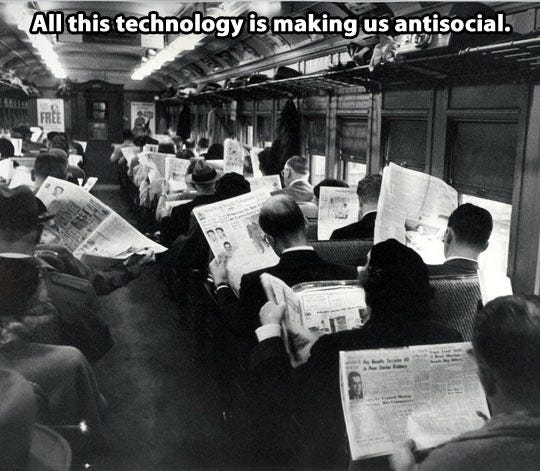
I think this is a mainly positive move. Mobile phones are massive distractions to children, especially in a school context. When it comes to young children, I am skeptic to the use of digital technology in education in general. School should help incorporate good habits into a child's routine, such as reading books, and nailing reliance on phones into children is not something we want to be doing in schools.
Cyberbullying is another big motivator for banning mobile phones. Perhaps even bigger than the distraction aspect.
It's also frustrating for teachers when bullying is happening online, outside of school hours but it still takes place between students in the classroom. It should not be the teacher's business but it obviously impacts schoolwork in the classroom.
I think this is a smart move unless someone can show a study that's showing positive impact from using smartphones in schools.
How does a phone ban stop this from happening? Not to mention the challenge of actually enforcing it. I suspect the kids who want to take pictures of others and upload them mockingly will still do it.
Children given unsupervised access to the internet is ridiculous. People freak out if a predator lives int heir neighborhood but they let their child be accessible to millions of predators via their phone or table.
This is why kids initial exposure to porn is 8 in the US and 10 when kids are getting addicted. This is all happening prior to puberty.
I still remember working with children and teens and found out, through the police and parents, that a few of the kids 11 to 15 were using their webcams to get people to buy them stuff online. This was in the late 90s.
I am a dad of 5 now. I don't own desktop computers and they are in common areas. When my oldest were teens they were their phones but they are in my room after 9 PM. Saved the drama of messaging fights and drama. No phones at dinner, no phones on family events unless it was end of the visit. My job as a parent is to help them become awesome adult selves and learning not to be addicted to anything from drugs, alcohol, laziness or phones is part of being a parent.
On the one hand, I view the early internet as saving me/raising me. I detested school, still do. Sure there were dangers back then too, but that's why we learnt to be skeptics, anonymous, question people's motives, and actually understand the technology.
On the other hand, social networks weren't around, videos weren't really around, advertising wasn't around, nothing was monetized, there was no such thing as a Webcam, no such thing as a mobile. By the stage of the internet, I was well and truly addicted to reading.
If I had children, I'd probably want to restrict them from phones and social media, at least until they learnt to love reading, learnt to concentrate without distractions, and skepticism/pushing back against social messages.
Simultaneously, I feel my current life would have been worse off without early access to the internet...
Edit: in case it's not clear, I think this is generally a good thing. It may do us good to remember this isn't the first time technology has tried to insert itself into the classroom. Television was supposed to revolutionize teaching, but most of us now would be hard pressed to believe that TV in the classroom is generally a good thing (the teacher generally used them when they were lazy or needed some time off). Let's not kid ourselves, the MAIN purpose/use, like TV, of phones and tablets are currently media consumption and social communication, not learning.
As someone who had unsupervised access to the internet as a child, I turned out to be just fine. But maybe beacause the internet was way different back then. (I am talking dial up era intrent).
To me after all these years the "new" internet got a dystopian image.
If I had a child, I'd provide them unsupervised access to the internet I remember, but certainly not to the one from today.
No it was worse back then. From 1995 My Uncle saw my 12 year old male cousin was on AOL and he got messages from men. My cousin just kept deleting them. My Uncle pretended to be a 14 year old girl and it was bad and he reported it to the FBI after AOL did nothing about the situation.
Long story short the FBI worked with my Uncle within a week and they arrested 13 predators in one night. My Uncle was on Nightline and every major TV national network that year.
EVEN Longer story Steve Case (Founder of AOL) banned my Uncle for life from AOL. Steve Case is scum.
Here is a Senate Bill with the story in Congressional Records.
"On-line services are an easy way for pedophiles to meet children anonymously, noted Dyanne Greer, a senior lawyer with the National Center for the Prosecution of Child Abuse.
``Many cases are not reported, so I'm not sure anybody is really aware how much this is going on,'' she said.
A Post probe uncovered these on-line horror stories:
Westchester computer expert George Telesha pretended to be a 14-year-old girl on America Online and was quickly besieged by perverts sending dirty pictures.
I remember buying my first webcam and briefly visiting the forum the manufacturer had set up, in 1999 or 2000. Basically the "forum" was about a dozen guys live streaming (postage stamp sized) pictures of their dicks. I don't know exactly what changed, but you don't tend to see things that blatant as much anymore.
You know it bugs me, but why can't we find the people abusing chat services to do these things? Are there that many of them? I'd like to hope that the percentage of men who are scum is not that high, but recent events have shaken that theory.
> Children given unsupervised access to the internet is ridiculous.
Why?
> People freak out if a predator lives int heir neighborhood but they let their child be accessible to millions of predators via their phone or table.
Well advise the kids of the dangers. I and most of my friends had unsupervised internet access. We are all doing fine.
> This is why kids initial exposure to porn is 8 in the US and 10 when kids are getting addicted.
Every kid is getting "addicted"?
> I still remember working with children and teens and found out, through the police and parents, that a few of the kids 11 to 15 were using their webcams to get people to buy them stuff online. This was in the late 90s.
And guess what? 99.99% of 90s kids didn't use webcams.
> My job as a parent is to help them become awesome adult selves and learning not to be addicted to anything from drugs, alcohol, laziness or phones is part of being a parent.
No offense, but your kids aren't prepared for the real world. What will they do now that they are adults with no parental supervision. Also, no parent with 5 kids is "responsible".
> Well advise the kids of the dangers. I and most of my friends had unsupervised internet access. We are all doing fine.
Most people who ride in car don't get into an accident. We still wear seatbelts.
> Every kid is getting "addicted"?
Perhaps not the best choice of words from the OP, but look up premature sexualization and psychological trauma.
> No offense, but your kids aren't prepared for the real world. What will they do now that they are adults with no parental supervision. Also, no parent with 5 kids is "responsible".
A comment like that to a stranger can be nothing but offensive. For lack of space or time to use anything more nuanced than crude Freudian terms, the role of the parent is to model the superego for the child while he's too young to understand the consequences of his actions and the dangers of the world.
We've banned this account for getting involved in flamewars. If you want to comment here, you need to read https://news.ycombinator.com/newsguidelines.html and take those rules to heart. That means being strictly civil, avoiding flamebait, and especially no personal attacks.
> I and most of my friends had unsupervised internet access.
I don't know how old you are, but personally (in my early 30s) the internet of my youth was pretty vastly different than the internet of today, i.e. as you say:
> And guess what? 99.99% of 90s kids didn't use webcams.
Well now most kids have a high quality webcam in their pocket at all times.
>I don't know how old you are, but personally (in my early 30s) the internet of my youth was pretty vastly different than the internet of today, i.e. as you say:
I too was a 90s kid. No. It really wasn't. The same dangers that existed back then existed today. There was threats of child predators, internet addiction, gambling, porn, etc. That's why we were taught to be anonymous on the internet. You could argue today's internet is a lot safer than it was in the 90s when most parents didn't even know what the internet was.
> Well now most kids have a high quality webcam in their pocket at all times.
And? 99.99% of them don't use them to sell their photos to pedophiles.
There are pedophiles lurking at libraries too. I guess we should stop kids from using the library. It's funny how people who want to control kids and who are so scared of everything find something to be scared of no matter what.
Just because 0.000001% of kids might do stupid stuff on the internet isn't a reason to monitor every kid or keep kids from the internet without supervision.
> > Children given unsupervised access to the internet is ridiculous.
> Why?
Your reasoning with kids. Sure when they are teenagers that's great but children need more than a reasoning parent. Children need to be protected and above everything feel safe. The internet is not a safe place for children nor just YouTube for kids without someone keeping an eye out. Research absolutely proves that children need to feel safe. https://developingchild.harvard.edu/resources/persistent-fea...
Now I am not talking about helicopter and babying children. I am saying all children need strong parents that will protect them and help them to make good meaningful decisions and have awesome experiences. They don't need parents saying hey 10 year old Susie there are guys that want to hurt you sexually for their own perverse desires so you need to .... No you tell them they are safe and you are their to help keep them safe. If they ever feel uncomfortable or someone is touching what a bathing suit covers to tell you. You also need to know that the vast majority of predators are family and friends.
If you aren't your children's protector your just throwing you responsibility and weight of parenting on to a child. Again I am not for helicopter and over protective, but all kids need to know that Mom and Dad will protect them (Even if we fail sometimes).
Yes when the 4th grade boy wrote down the url to where he saw a man having sex with a dog and gave it to my daughter, yeah that kid had some issues. He also had a tablet with Netflix when he was in Kindergarten and still has unlimited access to the internet. Sadly that kid ins't in school anymore due to his mother not protecting him physically or mentally.
> And guess what? 99.99% of 90s kids didn't use webcams.
And guess what kids are being exploited unbelievably now. The Children's Mental Hospital has many homes with just sexually exploited girls ages 11 to 15. There are dozens of them messed up. Most of them were exploited by people they met online.
> No offense, but your kids aren't prepared for the real world.
Hey buddy if I could swear at you I would. My two oldest that were abused for years. They both graduated from college (10% of former foster kids attempt college 50% don't make it past 1st semester) My son is being shipped out to Kuwait with the National Guard and he just got married last month. My daughter she now works full time with the girls who were sexually exploited. You are all focused on over babying children that you think negating a basic parental role of protector messes up kids. Please. They both lived on their own since 19 and when i can help them out I would, but my kids are the most tenacious hard working adults I know, because they knew the neglect they grew up with before my home was crap and that the love and protection they had when they moved in. It was hell for them and us both for the first year or two. In the end they are rocking. Also Mr No Offense I even got an award from the state of Pennsylvania and a bunch of congressional and state plaques for parenting these abused kids to where they aren't in the system anymore and are successful productive members of society.
The first step of parenting children is that you make them feel safe from day one till they are mostly adults. That's essential and you give kids internet with no filters? That's how we have Alex Jone's audience members.
It's against the rules here to get involved in flamewars and especially to get personal like this. I realize some topics are personally intense and one isn't always able to contain the intensity, but in such cases we need to take a step back and not contribute to the downward spiral.
Yes. There are bad people everywhere. Did you lock your children in the basement? I'm not denying there are dangers in the world and on the internet. My point is that those threats are overblown.
And there have been clickbait fearmongering articles every decade.
> Research absolutely proves that children need to feel safe.
And you telling your kids that there are dangers everywhere must make them feel real safe.
> Again I am not for helicopter and over protective
Okay. But everything you've written and the "research" you've done says otherwise.
> Did I say every?
You kinda implied it.
> Yes when the 4th grade boy wrote down the url to where he saw a man having sex with a dog and gave it to my daughter, yeah that kid had some issues. He also had a tablet with Netflix when he was in Kindergarten and still has unlimited access to the internet. Sadly that kid ins't in school anymore due to his mother not protecting him physically or mentally.
Anecdotes?
> Hey buddy if I could swear at you I would.
No need for that.
> The first step of parenting children is that you make them feel safe from day one till they are mostly adults.
And I posit that you did just the opposite. I doubt there was a day in your kids life that they felt safe.
> That's how we have Alex Jone's audience members.
What? Oh my god. I now am very concerned for what you did to your kids, if you had any.
Digital technology has its place, but in its present form, it's too easy to get distracted. My nephews would probably spend 10x as much time looking up youtube videos and playing pay-to-win apps than they would googling things if they had access to their phones in class.
I agree that in general the drive to "put a computer in every classroom" is absolutely moronic; in general, I think teachers don't adequately understand which technology is useful and cost-effective and which is not, and especially for teaching administrators, "technology" is just some nebulous black-box codeword for "expensive equipment." However, there is value in teaching children how to use technology effectively. For example, very few people know how to properly craft a google search, or how to discern a reliable source from a poor one. A lot of people, and especially children, can't even tell the difference between sponsored content and regular content. These are very important to teach children and I think this should be done in a scholastic context, as few parents would even have the skills to teach this. The problem is teaching kids these skills without distracting them - the secondary problem is that they're probably not learning from people who are very knowledgable themselves.
I think the ideal solution is some kind of locked-down, school-only (as in, it must physically stay within the school) tablet or laptop. It's probably counter-productive to spend too much time teaching children to write/read from physical media when >95% of a child's exposure to media from now to the foreseeable future will be digital. Ironically maybe our best bet is a "digital typewriter"
It seems like you’re hanging onto the old world a bit. Digital typewriter? These kids will be typing every day of their lives as adults. The cost of not using technology is higher than you think, and seems to be based in holding onto the past and protecting kids fro the world.
It's more than that. It's about socializing too. Now on breaks most kids just look into their phones, they don't teach themselves how to make social relations, how to communicate face to face with other members of society and how to coexist in group. This creates pathology which makes those kids socially handicapped in their future life.
> School should help incorporate good habits into a child's routine, such as reading books, and nailing reliance on phones into children is not something we want to be doing in schools.
School should help incorporate good habits into a child's routine, such as being outside, and nailing reliance on books into children is not something we want to be doing in schools.
Slightly paraphrased, same content. Care to elaborate what it is that makes phones more undesirable than books? At the moment this reads like an "in my times .." rant.
You can't rely on books as you can't carry enough of them with you for them to replace having to know things, and a phone is a fundamentally different thing from even an infinite number of books anyway, as it is a tool that let's you communicate--in private--with people around the world. It is totally legitimate for someone to have an issue with one of these objects and not the other entirely different object.
Well, maybe I use my phone very different from others. For me the "read things on it" aspect is the most important part. Before I had a smartphone (I got my first two years ago) I tended to carry five or six books around all the time. Now I don't need to anymore and can still read whenever I want.
Good for you, but maybe consider we're talking about children there, who probably didn't even pick up the habit of reading yet ? (read about the catastrophic reading proficiency in children nowadays if you have any doubts about this kind of claim).
Compared to phones, books offer delayed gratification. Although it is possible to come to a library and only look at the first and last page of a hundred books, not many people do so.
Stuff one can get on phones are however massive dopamine inducing machines.
Books are distraction machines on a different level. When I become immersed in books I tend to deprive myself of sleep, neglect my daily chores and procrastinate my work. I do feel much better about periods where I read a lot, otherwise I tend to incessantly grab my phone to check blogs, news sites and stock/crypto prices.
Books are not distraction machines in the sense phones are. Book may be a distraction from something else, but when you are already reading a book, you are concentrated, attention is stable and all cognitive faculties are being trained in positive direction (keeping the whole story in mind, imagining the plot etc.).
Phones, on the other hand, are distracting you while you are interacting with them. Attention is switching constantly between apps, even within a single app you may be constantly swiping through content in order to get gratification. In this mode you're UNLEARNING the stability of attention, that books help develop.
There may be specific apps and games that cultivate concentration as well, but the way the average kid uses their phone is definitively detrimental to their mental capabilities.
I would say that as someone who is very addicted to books and will tend to escape reality through novels that, yes, for a certain kind of people, books can be much worse than mobile phones.
I've had days where I didn't eat because I was immersed in a story, I will skip sleep, neglect my work, not shower when I'm inside a good novel. And, that behavior will continue until I've finished reading the entire series.
I'm not sure when the last time was I saw an ad on my phone. The only example I can think of would be the Kindle app telling me of comparable books, which seems no different from all the tech books I have which have book recommendations on the last pages.
>I'm not sure when the last time was I saw an ad on my phone.
Are you running a flip phone? Because most smart phones I see these days have no less than 10 apps that can present ads or notifications at almost any given time.
Cave walls are massive distractions to children, especially in a school context. When it comes to young children, I am sceptic to the use of painting in education in general. School should help incorporate good habits into a child's routine, such as listening to stories, and nailing reliance on walls into children is not something we want to be doing in schools.
That's what your comment will sound like in 100 years.
Unless those cave walls could be neatly concealed in a pocket or under a desk and served up a stream of rapidly-changing Skinner-optimised content, accompanied by irregular purposefully distracting notification signals, I don't think this is a good analogy. Why is it so hard to believe that we are getting better at hacking our attention spans?
Indeed, the cave wall comparison highlights the difference between stimulation and distraction. Daydreaming while staring at the walls of Lascaux would be a significantly more useful activity than having your attention micro-partitioned by the demands of a Snap streak.
Look at it this way, some people have broke escape velocity and reached orbit. Those that have reached orbit are now laser beaming down the rockets still trying to reach orbit.
That's how the US education system works and why it is so shit.
We pay orbiters to prevent others from reaching orbit. It's quite crowded and no one wants the competition.
If phones are providing children with a more stimulating experience than school, the schools themselves should improve their product, rather than banning the competition.
The problem / challenge there is that school isn't very stimulating, or, not for everyone - school, especially elementary and secondary school, are based more on discipline and forcing people to learn a basic curriculum, whether they like it or not. If they get distracted by their phones or whatever they'll run behind, score low on their tests, end up in a lower secondary / tertiary education, aaaand have to settle for an okay job.
Kids are very easily distracted, and the current school systems are designed to deal with those by removing distractions and forcing a bit of discipline.
The alternative would be more personally optimized education, but that's a lot more expensive and harder to scale - and teachers are already an underpaid and overworked demographic.
Besides, kids that age use their phone more for social contacts and distractions than learning stuff.
You realize that it is impossible to beat mobile apps at gratification versus teaching science for example? It is impossible to learn math by reading clever anecdotes with numbers, students have to solve multiple repetitive problems themselves or it doesn't work at all. And current mobile games? Take some modern mobile rpg - they auto fight and auto quest, you just sit and watch new items dropping and levels increasing. Try to beat that gratification with any substantial learning class.
I don't think the competition is fair. The requirement to teach useful things to children makes it substantially harder to design experiences that are as stimulating as pointless distractions.
In my view, education is more effective if it is also entertaining. There's no particular reason why pedagogy can't take advantage of nearly ubiquitous computing hardware, other than the textbook and curriculum racket that publishers are running.
The mammalian instinct for play is essentially a learning mechanism. All it takes to educate is to structure a game such that the lessons being learned are useful in the real world. We run around in open gaming worlds collecting tokens for no greater purpose than to make numbers bigger; we can easily adapt that to collecting knowledge for the purpose of getting smarter.
Imagine if the crafting system of an open-world game used actual chemistry and metallurgy. Kids could be trading tips on textiles and steel so that they can make non-anachronistic weapons and uniforms before doing a boss raid on Napoleon's army. Imagine if making a battle rifle with better stats in the game required you to know how real rifles work. Imagine the sort of teamwork that could take place if everyone in the clan/guild were required to be logged on in the same room at a specific time every weekday. The teacher turns into the quest-giver, and the reward is leveling up your brain, and maybe in-game currency that can be used to buy avatar prestige items.
Each state could certainly afford to hire a few developers, to make educational games that poke the very same skinnerbox dopamine buttons that the purely entertainment games poke. Each state could hire some video artists to produce educational content. I may have retained more from professional programs like "Connections" or amateur videos like "History of Japan" than I ever kept from my textbooks.
It has always been a mistake to make school boring. School is boring now because a boring school is cheap (relatively speaking), and it still works just well enough to keep civilization from collapsing. The curriculum/textbook/lecture model was necessary when education was limited by labor, such that every N students require 1 teacher, but now instead of compartmentalizing education into fixed classrooms with one specific teacher and N specific students at a time, we can have 10000 of the best teachers teaching 10 million students at once, such that they can each learn and demonstrate mastery at their own pace. And this move by France is one step away from that.
> All it takes to educate is to structure a game such that the lessons being learned are useful in the real world.
This!
There's a game my 7 year old couldn't put down until he finished it. It teaches the concepts of basic Euclidean geometry. There are similar ones for algebra and programming that is a little bit beyond him now, but I'll try him on them again in a few months/year.
He also has made these contraptions with random materials. A hammock out of a bit of surplus netting, for instance. I'm pretty sure hours of Minecraft helped with the desire to create things.
Now I do need to find a gamification of basic logic and critical thinking...
You have expressed this better than I could have.
Indeed, we should put in effort to make school fun and entertaining.
Learning is a life long process, and if the first thing you learn is that learning is boring you are less likely to engage in it and therefore you will be less adaptable to the situations life puts you in.
As teachers we should make sure that learning is fun.
TLDR: As a high school level teacher, this would be less of a problem if teachers had stronger enforcement powers. Since we often don't - I would strongly favor a ban. If students need a computer, we have them available all day, every day.
As a high school level teacher, I appreciate the attitude that there are amazing opportunities for learning and skill development with computers. I agree with this wholeheartedly. That said, a majority of my students are addicted to social media (they are teenagers, after all) and cannot self moderate their attention and/or behavior on this issue. They are not, generally, breaking their attention away from class for some other kind of educational outlet (for which I am already fairly lenient when appropriate). They are sending their friends snaps, plays both games, and texting.
Of course, using phones in class is already against school policy, but it will remain and issue until I am able to take a phone away from a student. At a prior school, this was explicitly against policy becuase it was considered a liability issue as phones are expensive personal property that the school
did not want to be responsible for them. Additionally, parents give minimal support and/or flip out when it happens. Very few have the willingness to keep their student's phone at home during the school day even when it is a known and acknowledged problem. Often, they simply don't want to argue with their teen about it.
I believe that we - as a American culture - are still too enamoured with our smart phones to effectively acknowledge the potential negative effects they can have on our attention/learning/cognitive development.
At my kids' school, they encourage appropriate cell phone use in the school. For example, if there is a homework assignment on the board, rather than wait for everybody to copy it down, kids are told to take a picture of the board. They also insist on the kids using some kind of calendar to track everything and most kids use their phone calendar.
There's some kind of Twitter-like service that is used for teacher-student communication and of course they use email and Google Docs a lot.
My kids have had assignments that involve making a movie and their phone is their video camera.
If the kids want to use a computer, they can (they are all issued ThinkPads that are frankly awful) but I think most kids would prefer to use their phones when they can.
Also, the school has a pretty aggressive filter on the wifi so kids that want to access the internet in the school end up using their phone to get access to the things they need.
> For example, if there is a homework assignment on the board, rather than wait for everybody to copy it down, kids are told to take a picture of the board
just post the assignment online. Not a reason to allow phones in class.
The point is not to make up reasons to use phones in class but rather to identify opportunities to teach students responsible use of phones, which will exist outside of class and well into the future.
The life skill is the responsible and appropriate use of technology. The worst thing the school can do is come up with constraints so narrow that the kids get through school without having to exercise judgement or restraint.
My children do not have cell phones (if they want one they can buy it and a data plan themselves - so far that hasn't happened until they are about 18), but teachers assume that every student has a cell phone. The teachers then ask the kids to do things with their cell phones like you are describing. When my kids say they don't have one they are not believed and receive failing grades for the assignment. I've complained to the principal (the school has a policy of no cell phones) but to no avail.
Assuming you can afford at least some kind of inexpensive phone for your kid(s), this is kind of a messed up position to take. Your children are failing classes because you want to make them purchase their own phones and plans, which of course is not realistic. So they failed because of something completely beyond their control and entirely within yours. As a parent, I’d be ashamed of myself if I had allowed that to happen. Even worse, you seem to be bragging that you deprived your children of this necessary tool.
In modern society, a smartphone and plan is as essential for school age children as the clothing you presumably did not make them engage in child labor to buy.
It's not his fault that the school makes assumptions about the lifestyle that he has chosen for his children. I don't plan on giving my children cell phones, either, and would home school sooner than I would be strong armed by the state into buying a device with limitless potential for evil. I don't think children are prepared to own them, even with internet blocks children end up being constantly bombarded (or seeking out) pornography on school issued laptops, smartphones, or any other internet enabled device. I practice what I preach, and have a phone that is only capable of making phone calls because I believe that constant internet access is a detriment to my concentration and my well being.
I am proud of being the bulwark my children need to grow up to be well adjusted adults, and I'm not going to let some administrators think they're the bosses because they were appointed by some bureaucracy that I had no say in whatsoever, or be "ashamed" because some stranger on the Internet says I should be.
> It's not his fault that the school makes assumptions about the lifestyle that he has chosen for his children.
I'm not sure they see it as a lifestyle choice. It's just another thing that they expect kids to have. It's been added to the list of binder, paper, pens, laptop, and gym clothes.
You misunderstand. I'm not depriving them because I want them to buy their own phones. I'm depriving them because my wife and I believe extremely strongly that children should not have mobile devices, period.
Similar thing happened to me way back in the 80's. The history teacher assumed that every family had a video camera, and the big assignment for the year was for each student to make a video.
When I protested that I didn't have a video camera, she didn't believe me.
Being a resourceful youngster, I managed to get my hands on a second-hand security camera and interface it with my parent's VCR. I ended up getting a D on the assignment because the resulting video was in black-and-white.
I know some of the kids just have old phones from their parents or one of those $40 phones that are hanging in a blister-pack at the drugstore. They use them with the school's wifi so there's no data plan to pay for.
Weird is good. We started out as a sub-culture of weird ones.
The problem is, that he doesent teach responsible drug use. Which modern phones and the internet basically are. So if you do not show what is appropriate (1 glass of wine) and by example show what you do not (engage in binge drinking) you are not preparing them for the world.
And we all knew how the kid ended up, who never drank a single drink before the class garduated.
In diapers in the sickward, after he downed a whole bottle of vodka.
> For example, if there is a homework assignment on the board, rather than wait for everybody to copy it down, kids are told to take a picture of the board.
Bad choice: this is losing one opportunity to get them to write something. As a teacher, one should look for every possible occasion to practice writing, especially when it has a purpose.
Would it not be possible to have a box at the front of the room that everyone has to put their phone in when they come to class, then they can get it back after class is over?
If anyone's ever been in a secure facility, they have little mail slots, sometimes locking with a key you can take, to store your phone while you go inside. Seems like we could just put one of these in every classroom. That should take care of the liability issue.
Seems like it'd be pretty easy to enforce this one. A teacher will still catch students on their phone, and then it goes in the box with the dummy phone. Plus punishment for sneaking a phone in.
And those lockers were not at all secure, at least in my HS. There is no way I would encourage my kid to leave his phone in his locker. He'd be on his 3rd or 4th phone of the year by now.
This is such a luddite view and frankly almost a power tripping view. Have you thought that they are "addicted" to being social with their friends like normal teenagers are? It already is against policy in most places to have smart phones during class, why ban them during breaks?
It's during freaking breaks. How about let kids be kids for once and stop trying to grope into their personal lives! Why do you need to police their breaks too? How is this not a civil rights issue?
As millenials and gen xers age, they are forgetting they were kids once and are quickly becoming twice the son of hell authoritarians their parents were.
Take a breath. My students have full access to their devices during breaks. They have full access to their friends. They have significant opportunists throughout eh day to socialize. That's not really a problem.
The ability to maintain some sustained attention to a task is a pretty fundamental developmental skill that I - as an educator - am tasked with helping my students develop. Many of my student display a compulsive behavioral need to be on their phones and this has very obvious and immediate impacts on their focus and learning. That's a problem that I don't see being solved at the high school level by casual/cultural policing of behavior during class.
The break thing is a reference to the ban. The second sentence of the article is "Children will be allowed to bring their phones to school, but not allowed to get them out at any time until they leave, even during breaks." So the ban sounds like your current situation, plus a ban on using phones during breaks.
Your comment seems to be lashing out vs. actually addressing the parent comment. The user you are responding to already acknowledged the students are "addicted" to being social and using social media because that is the nature of being a teenager.
> "Of course, using phones in class is already against school policy, but it will remain and issue until I am able to take a phone away from a student. "
They also noted that using a phone in class is against policy but they have no way to enforce this policy... which is their reason for supporting a ban.
noobermin's comment makes sense and is reasonable when applied to germinalphrase's comment in light of the article itself, which includes in the ban the use of phones during breaks. germinalphrase's comment says "I would strongly favor a ban" and it is reasonable for noobermin to assume that they are referring to the ban in the article, since no exception was made in the original comment for this (although in an uncle post to this germinalphrase does clarify).
I know it's bad form to object to people downvoting your own comment, so I will do it on the GP's behalf.
I get where you're coming from but if they're spending their breaks on their phones, they're only interacting with their friends through text rather than face to face. They're still kids and we don't know yet whether that face-to-face interaction they're missing out on will be important to them later in life.
It's not about restricting their freedom, it's about health. It's not a "civil rights issue" if you restrict your kids from eating nothing but greasy burgers every day.
It'd be kind of neat if the phones had a mode similar to the "car mode" on Apple phones, where it goes into a DnD mode and becomes inconvenient to unlock and use when at a certain location. So a kid can use the phone, but texting or other features are harder to access in a non-obvious manner and notifications are muted. Almost like being in Airplane mode by default except during in between class breaks.
They are useful tools, but even outside of school they constantly suck away our attention, and apps are designed for this, the constant distraction needs to be curbed, not their use as a pocket computer.
>They are not, generally, breaking their attention away from class for some other kind of educational outlet (for which I am already fairly lenient when appropriate). They are sending their friends snaps, plays both games, and texting.
I'm all for moderation but the kids I have come across in my K-12 experience, if they're not paying attention, are generally pretty bored out of their minds with whatever else is going on in the classroom. Which begs the question; whose fault could that possibly be? The child's or the adult in the room?
>*
I'm all for moderation but the kids I have come across in my K-12 experience, if they're not paying attention, are generally pretty bored out of their minds with whatever else is going on in the classroom. Which begs the question; whose fault could that possibly be? The child's or the adult in the room?*
Well, the kids are supposed to learn things, not to be entertained.
Sometimes the two can coincide, and it's great and inspiring when it does, but the idea that learning must be an entertaining activity only does a disservice to learning, and hampers the progress of the learners. Sometimes it's just hard practice with no fun, and it's done for the sake of learning, not for giggles.
The kids who wanted to do well always learned the material no matter how boring the material was taught and the kids who didn't want to learn didn't learn a thing even with the most engaging teacher. Teachers can only do so much.
Plenty of schools have random assignment for students yet teacher A's students vastly outperform teacher B's students. Sure, the best student in B is generally better than the worst student in A but they are still generally behind the best in A.
I have done research and haven't found that "plenty of schools have random assignment for students yet teacher A's students vastly outperform teacher B's students".
I'm very well aware of studies showing that teachers make an impact. That much is obvious. What I'm not aware of is any significant group of schools that regularly use random assignment.
If you mean at the school level, that's a policy choice which is far from universal. However, their are a lot of schools and a meaningful number do random student assignment.
Learning the right things, in the right ways, is entertaining. I'd argue that school is neither about learning nor about entertainment. School is that experiment with the monkeys and the ladder. Its original purpose was making mindless factory workers. Students became teachers who taught more teachers and so on. What is the actual purpose of school nowadays? It's a place where you can leave your children while you work and it's a checkbox on a CV.
Schools exist for the same reason that farms and factories exist: it's a lot more efficient having specialised workers (in this case teachers) who can do the job far more effectively (in this case teach 30 or so children) than having every person do it themselves (in this case every parent take a large portion of time out of their day to teach their own child individually).
The alternative to school was for girls to help out around the house until they were married off and for boys to either learn their father's trade and then do that for the rest of their lives or get apprenticed off to whoever could take them and then do _that_ for the rest of their lives.
School helps children create a life for themselves. If children don't learn anything there they'll find far fewer paths open to them later on.
The kids are fed a sugar cereal diet, get no exercise, and are told to sit still and learn damnit. Meanwhile the rest of their existence is highly stimulating video games and instant gratification.
I blame the adults.
The kids who are at school because they like to learn don't need a teacher. The other kids should learn to hunt and be strong.
Since when is just being able to hold a student's attention 75% of the time entertainment? It's much more nuanced than my original comment, I understand, but the assumption that simply removing the device (which I agree is the way to go) will suddenly get kids involved in their learning doesn't take into account all the missteps that occur before the child or teacher enter that classroom. Whether it's staffing, fiscal planning at an admin level that reduces actual classroom instruction, lack of classroom management PD for staff that may need it or a permissive parent.
> the assumption that simply removing the device...
I don't think anyone is suggesting this is the silver bullet, but it's one less distraction towards the goal of getting kids to learn things and also to learn how to learn.
Wrestling with learning a hard subject, even under the best teacher, will often lose out to the instant gratification that is available from a phone if that distraction is available. Adults have problems with this, so why wouldn't children?
The way mobile phones are being used in the present day, by both children and adults alike, is unhealthy and at the very least it can be said that the potential ill effects are not very well understood. Much like how research into the ill effects of smoking were not properly understood during its heydays in the early 20th century when it was a sign of social sophistication and took many decades before a conclusive link (to lung cancer) was established.
One of the major changes it has caused in our societies is the splintering of attention and erosion of the ability to confront boredom (let alone the skill to turn it into something useful).
For example, if you reach for your mobile phone when your friend with whom you're having dinner excuses himself to go to the restroom, then that is a symptom. By itself, browsing some news websites or checking your social media feed is probably harmless in this context, but there is a huge opportunity cost in those missed moments where you could've profitably exploited that break to think about things that are important to you and to him.
Perhaps the ensuing conversation could've been steered in a deeper direction had you paused to think in those moments.
Just because something annoys you or you find it conflicts with your values does not make it unhealthy.
I remember life before smartphones. I remember boredom. It sucked. I would never go back to the agonizing pain of sitting in the DMV for three ours or standing in line at a grocery store just for some "missed moment" where I study the shitty tabloids in line or DoT pamphlets.
Romanticising the past is not new. Whether it's television, hot showers, or smartphones, there will always be cynics who wish a simpler life on the rest of us.
I am not romanticising the past. I am not advocating to stop using smartphones altogether. What I am saying is that people by and large don't seem to use it in a healthy way.
It seems many of the folks are using smartphones exactly in the way you describe- as an ill defined and uncertain but good enough means to plug some passing hole in your day. Is that good? I don't know. Are you losing out on using that time to prioritize what matters to you? Probably. The most damning thing about this is that you are constantly reaching for something with no fixed outcome planned in advance and allow that to temporarily occupy your mental space (if I wanted to exaggerate I'd say "hijack your mind"). This does not look like a good thing to me.
Boredom can be uncomfortable, but it is not necessarily bad. It boosts creativity for example [1].
Not sure what are the benefits of mindless browsing on the phone then, if we suppose that it's mainly about killing boredom.
With all due respect, I think this says a lot about you if you honestly equate boredom as pre-smartphones. Millions upon millions of us led a boredom-free life prior to the smart and/or cellular/mobile phone. And there's far more to do these days.
This is going to be a bit like the gambling debate, since if you do just use it responsibly then yeah, it's probably going to be a net benefit by most value systems. The issue is is the creaping, insidious havoc it is wreaking it peoples lives.
I have seen people - who by simple analysis of the counterfactual would be ok without the internet - have their lives ruined.
As for the young, it is a massive change and we cannot be sure about the harm it may have on them as a cohort as they get older. There was a study that showed phones cost the equivalent of (I think it was) a missed week of school per year in educational attainment.
But I think more than that. Like a lot of dependents/addicts people will
, when being candid admit that they would prefer a life without these devices (I like to think I am not merely projecting here).
Romanticising may not be new, but the rate of progress on many serious issues has halted in the west. Despite, new drugs, new technology, higher funding ... etc.
  - Depression and suicide are increasing problems

  - Educational attainment has stalled

  - Productivity growth has ground to a halt
Absolutely. I've been saying for years that we are in the "smoking is cool" phase of the mid 20th century. It's not going to be until decades later that we are going to see a litany of societal problems due to a massive chunk of the workforce that were weened on screens.
> erosion of the ability to confront boredom (let alone the skill to turn it into something useful)
I think this is greatly underestimated. In those moments when you just stare, your surroundings intepret it as fading out with a blank mind, when you're actually doing things like reflection, planning, fantasizing, etc. Very pleasant mental tasks!
The scary thing about smartphones is how they might be permanently changing adolescent and teenage brains, and not in a good way.
Checking texts and emails, surfing the internet for information, and yes - even sites like HN and reddit - cause a dopamine surge in the brain that can lead to so-called 'dopamine loops' [1]. In such a crucial part of brain development, my fear is we are turning kids into the equivalent of 'lever-pushing monkeys' [2]. Certainly there is already evidence that smartphones might be contributing to negative development [3].
Again, same as above: do you watch TV or listen to radio in school unless the teacher introduces it as part of the learning process? It's not that everything about a smartphone is bad - just like not everything about TV is bad - it's the unfettered and ubiquitous distractions inherent in smartphones being used during school hours for uses aside from learning.
Yes, and it’s fairly easy to hide an earplug by adopting a leaning posture.
Also we read comics and books, and played games on our calculators, exchanged paper messages etc., though you would classify that as active distractions I guess.
It’s true that smartphones are a different kind of devices, but I’m not sure it’s such a big deal if we account for the number of hours everyday they will be spending using them formthe rest of their life. Might as well have them part of the equation from the start.
> Again, same as above: do you watch TV or listen to radio in school unless the teacher introduces it as part of the learning process?
I don't, because I'm not in school, but my SO - who is a grade school teacher - says that there are problems in the school with students watching off-topic videos (analogous to "TV") when they should be doing other work.
In any case, distractions will exist, and continue to exist, students will seek them out, and this will forever be a game of cat & mouse.
Well, true, but television in itself back then had much less "immediate reward" potential whereas video games and mobile devices are hands-on, and the experience changes much more quickly at the users' expense. The only comparison I can think of to the tube in that way is around switching channels on the tube on demand lol. The content is markedly different as well, often designed to generate easy feedback loops. Yes, TV originally did cause massive changes to social life and can also have negative impact. but I do not think it's a good idea to be dismissive of a potentially larger impact simply because of some similarities in technological progression through generations.
Though. I do see your point and maybe in a few more generations it will seem like just another bump in the road. Can't say I am optimistic in any case.
Definitely true. As pointed out in your link, the redeeming thing about complex video games (e.g. an immersive RTS or a complex level designed and puzzle filled FPS) is it causes advantageous adaptions in the brain, although at the expense of potentially becoming addicting with too much nonstop playing.
We can decouple these effects in video games partly by limiting continuous playtime; it would be interesting to see if the same could be done with smartphones in an educational setting. I can think of one suggestion: make smartphones only able to utilize educational technology (e.g. a VR tour of the solar system) during school hours and disable text/email/social media apps (but leave emergency call numbers). How to implement this beyond the honor system, I am not sure. But maybe that is all that is needed.
Don't forget the social aspect of that addiction, which is arguably the most insidious aspect of it all:
> We found that social gamers were willing to spend a lot of time and money on the game because by playing the game, they could: get an enhanced self-concept and self-efficacy, get a sense of community belonging, and distract themselves from the challenges in their lives.
I actually think there are kids who listen to the radio in school, and I absolutely would have watched TV in class if I could have gotten away with it.
As a parent of three adolescents I enjoy the fact that I can reach my kids whenever and Find My Friends allows me to confirm that they made it to school safely on a snowy day, for example.
However.
I did some volunteer teaching for a couple of years at my son’s school. Interestingly, I didn’t seem to observe students reaching in and initiating engagement with their phone very often. It was almost always in response to the “buzz”. It was so clear. They are there taking notes, looking at you, or even just staring at the floor. And I would see the small “snap” bodily response that happens when the phone buzzes with whatever. And mentally they might as well have jumped up and walked straight out of class. They were gone. Not “half paying attention while looking at this thing” but completely transported to a different sphere.
Having every student disable all push notifications during class time would have solved nearly all the problems I witnessed. They developed “driving mode”, would sure be nice if they did an easy-to-access “class mode” where every notification of any type except a text or call from mom or dad was suppressed. Sure, some would refuse to enable class mode but with the students I taught, if I reminded at the beginning of class to turn it on, I suspect a fair amount of my students would have done it voluntarily.
You might enjoy an Orwellian access to your child's location, but as they grow it tends to suffocate the child's development. Many friends of mine who had been chained like this during middle school and high school proceeded to go to college and fall flat on their face in various ways (as their parents weren't there to strictly mind over them).
Kids can walk home on their own just fine. I used to walk a mile to school in Portland, OR and I was far from being in a safe neighborhood like I'm in here in Seattle. But, despite that I never had an issue during those years.
Instant reachability and the expectations surrounding it can easily snuff out personal development of children, at least one of my friends never left home, dated, etc, mainly due to his mother's incessant calls (80+ times if he didn't pick up, totally insane).
>Having every student disable all push notifications during class time would have solved nearly all the problems I witnessed.
Back in highschool IT would heavily rate-limit sites that were doing real time updates (basically just Facebook) because our pipe was small enough that 50% of people having Facebook open in a tab was a big enough amount of traffic to care about. We also implemented network level ad-block and really aggressive caching.
I'm sure there's similar things being done on a piecemeal basis in schools located where cell service is terrible enough that you want to be connected to wifi at all times. Most kids don't text much anymore so traffic goes through resources the school control. Dropping some arbitrary amount (say 95%) of facebook messanger, snapchat, etc. traffic on the student subnet/vlan except during the time slots between classes would be easy and everyone would just assume that the wifi sucks.
Why wouldn't a school have wifi available? I've visited a half dozen schools across multiple districts this year for my son's activities. All of them had unsecured public wifi available. It's just expected in 2017.
Sounds like pure common sense to me. Schools are implicitly responsible for the overall well-being of kids. Many schools ban smoking, sugary snacks/drinks, some dressing style (or non-dressing), makeup. Many parents would love to send their kids to schools without a phone, this will empower and support them.
Sure. It’s pure common sense. And parents can totally send their kids to school without a phone. I agree with everything in this legislation save for the fact that it’s a legislation. My future kid wouldn’t even get a smartphone until age 15, if I keep my mindset for this long.
But do we live in an age where parental and community authority are so diminished that parents need the power of the state to bolster their discipline of their kids? Maybe we cater to the kids too much in that case. My mother was never afraid of enforcing rules with me. Every kid in my life had a gameboy growing up. Except me. I complained and said everyone had one. I’m really grateful she didn’t just fold to me because I’m not addicted to video games and knowing my generally addictive personality, I would be if I had been playing games for hours since the age of 4.
I threw a tantrum. For sure. Many tantrums. I said abusive things that I’m ashamed of, because she wouldn’t buy me a gameboy. But dealing with childish outbursts is a part of parenting. We don’t fold to children just because they make our lives unpleasant. She was also under social pressure from my uncle (whose son had a gameboy). She ignored it.
My high school has a VPN that banned Facebook during school hours. We were sent to the principal’s for disrupting the class or playing with our phones. Must we involve the state in everything?
It’s also pure common sense not to cheat on your spouse, or let a young child have an iPad, or watch more than 3 hours of TV in a day. Or drink too much soda. Or not going to them gym. By this logic, we should outlaw these too? Why is our reaction to minor suboptimal behavior to involve the state? There are many intermediary steps to enforce such a thing before needing to do this.
> But do we live in an age where parental and community authority are so diminished that parents need the power of the state to bolster their discipline of their kids?
It's not that dramatic; it's just that at school the parents are absent, and the teachers' authority is typically undermined by the parents --
congratulations if you are not one of them, but in such case I am simply talking about your kid's classmates' parents.
Try to limit the children's freedom in any way (e.g. take away their smartphones if they play Angry Birds or browse Facebook during the lessons), and at least one of the parents will complain and threaten to sue the school. The easy way out for school administration is to let kids do whatever they want to, and formally require teachers to maintain discipline in the classroom while simultaneously forbidding them to do anything that could actually have an impact.
The best strategy for a parent is to try finding a school when parents of other children are not idiots. That is typically easier said than done. What I would recommend is trying to find something unusual -- for example I would choose Montessori education for my kids; not because I think it is a superior option per se, but simply because it is not the default option, and I expect the most stupid parents to go for the default option, so this is how I would try avoiding them. Problem is, if this strategy becomes too popular, many of the idiots will choose it too, simply because they heard somewhere it was the right thing to do. (It's complicated because some of the idiots also want to get the best education for their kids; they just can't stop themselves from trying to undermine it the moment someone provides negative feedback to their kid.)
Public schools are owned and operated by the state, but that doesn't mean their policies are managed and enforced at a state level.
I agree that this policy is a good one, but I don't think should be enforced by the school. I'm not an educator, but if I were I don't think I'd be happy about forfeiting my policy control to a government official.
How would a law like this even be enforced? Are teachers expected to take legal action against their students?
> I agree that this policy is a good one, but I don't think should be enforced by the school. I'm not an educator, but if I were I don't think I'd be happy about forfeiting my policy control to a government official.
Educators in public schools are government officials.
> How would a law like this even be enforced?
Laws and policies prohibiting objects in schools are common, and typically enforced through confiscation when the offending item is observed; whether after that the item is forefeited, returned to parents, or has some other disposition , and whether there is subsequently legal proceeding or additional penalty, varies considerably but is generally peripheral to primary enforcement.
Why did I had to scroll that far to finally find someone talking about the parents ! (or maybe I missed it)
For me I find it astonishing that state have to make laws for common sense. When did it made sense to parents to let their kids go to school with a tool known for its distraction impact ?
Some years ago, would you have send your kids to school with a portable tv ?
The lack of parent education and common sense is the real problem for me here.
For the record, I’m french and speaking from a french point of view, but I guess it’s the same in most countries.
Phones do have useful purposes for children. When school is in session that purposes is limited to calling 911 (the emergency number in the US). However once school is over it lets the student tell their ride (maybe their parent, maybe someone else already arranged) exactly when soccer practice is over and arrange a meeting place.
Note very carefully that the useful uses of a phone are a small percentage of all the functions a phone offers. I've considered buying my kids a phone watch with 3 buttons: call mom, call dad, call [someone else but I can't figure out who]. Of course phone watches have been in the news for serious privacy concerns, but that is unrelated to the need.
I understand your point of view but parents managed to do without cell phones for decades and it was not a problem. Apart from the 911 example, it seems to me that parents are buying them a convenience (not sure of this word) in not having to wait 5mn more if the practice is not over when they show up.
In fact, it’s like letting the tv rise your kids because it’s easier and give you time back.
On a last point, I agree with your last statement, and I think a téléphone with 3 buttons will be the best of both worlds :)
Cell phones were banned during my years in high school, and smartphones didn’t even exist until halfway through my final year.
In hindsight, I am thankful for the enforcement as it made for fewer addictive interruptions in attention that I currently deal with in my professional career and personal life at large. Texting under a desk or playing a 2d game on a flip phone was about all you could get away with.
The important thing in the article is that this ban concerns phone usage during breaks and lunch. Phones in classes were already forbidden long time ago.
Forbidden, maybe, though the article mentions it only as school policy. I don't think there was a government-issued ban on phones in classes, or at the very least the article does not support this assertion.
> [Jean-Michel Blanquer, the French education minister] said some education establishments already prohibited pupils from using their mobiles.
> At another school, Mathilde, 12, said: “It’s ridiculous. At my school, we don’t use them in class or during recess, so what’s the problem? If anyone’s caught using one in the toilets or at lunchtime, the phones are confiscated immediately and the person is given detention.”
This is certainly an important aspect of the ban, but also relevant is that this is a centrally-issued (unfunded) mandate rather than policy set on a school or district basis.
I think that is a step too far. Imagine they banned books during breaks. That's how far this is.
I get you want to not have them use them during class but that is the general policing class behavior that teachers are supposed to do. Why ban them during breaks when it doesn't hurt their studies?
Mobile phones get stolen and can take pictures/videos that can then be used for bullying others, it's quite different from a book. I don't have an opinion regarding this new law but those are the arguments I heard in the news.
It will still be allowed to use mobile phones for "emergencies" from what I read, i.e. a teacher is not here and a child wants to contact a parent regarding that.
> It will still be allowed to use mobile phones for "emergencies" from what I read, i.e. a teacher is not here and a child wants to contact a parent regarding that.
If that happened in my son's school (he's 5) I would expect one of the pupils to simply wander into another classroom, or reception. Given the number of parents who work full time I'm not sure what good a child phoning their parent is going to be.
In the highly unlikely event I need to contact my child, I will phone the school and they will pass on a message.
It may not hurt their studies, but perhaps their social skills. I recently stayed at a hostel, and when I first walked in I noticed how in the common area almost every single person was alone on their phone. It made me long for the pre-smartphone days in which I imagine travelers were forced to socialize with each other.
While school lunch is a slightly different situation, I think it still applies that without phones kids will be forced to communicate more directly with each other.
No, he's right. Until about 10 years ago, meeting people was an integral part of travel.
You'd be essentially cut off from your friends back home (apart from maybe a daily email session), so you made new friends wherever you went. You'd go down to the common area of the hostel (or the beach bar near your bungalow in SE Asia), and strike up a conversation with pretty much anybody, since everybody there was traveling as well.
Now I can, sadly, verify that backpackers spend their common-area time on their phones, going about their usual business with their normal "friends". With the only difference being that they're now trying to upload photos that will make those friends jealous enough to leave a like.
> You'd go down to the common area of the hostel [] and strike up a conversation with pretty much anybody
Don't conflate what you would do with the general case - I, for one, -might- venture to a common area but it's extremely unlikely I'd ever consider trying to strike up a conversation.
Apologies if I was not clear. That was what I observed other people doing. Lots of talking, lots of "new best friends", nobody sitting alone pretty much anywhere.
Worldwide, as observed during 15 years of ~6months/year traveling. Most travelers during that period were, in fact, open to speaking to one another.
And again, in the last 5 years of doing trips on several continents, people you see at "the bar down at the beach" are usually looking at their phone, even when seated at the same table as other travelers.
That never used to happen. And I bet if we crossed paths back then and I asked you where you were from, you would have replied. And we may have even had a conversation.
"You'd go down to the common area of the hostel (or the beach bar near your bungalow in SE Asia), and strike up a conversation with pretty much anybody, since everybody there was traveling as well."
Never ever done that and I did travelled alone a bit. I know one person pulling this off, all other people I know would not have done so. Once someone tried to befriend me too much, but I found that uncomfortable (personality mismatch mostly).
For that matter, most people travelled with friends or friends groups and not alone.
It is cool that you was such person, but most people were not.
Hmm, that's not the comparison here. Wanderers, travellers (especially those in youth hostels) were often doing that activity in part to meet a wide variety of people, something they were less able to do staying in one place at that time.
(Edit: I should mention that I'm citing my Dad in my head here, who is an embarrassingly social creature in situations where I would never strike up a conversation. He spent a lot of time travelling around Europe in the 70s staying at youth hostels, e.g. in his university vacations.)
I believe this need is fulfilled by things like Tumblr now, where there are close nit communities centred around specific (often odd) interests and identities, who are vastly geographically spread. The same could be said to an extent for other social networks too, of course, including this website :)
I don't think socialization is a big issue - in fact, I think it can help socialization because it gives kids something to talk about or do. Lunches were excruciatingly boring and often isolating when I was in middle school through high school. Having a phone would have made it so much less miserable.
I'm generally all for the ban, though. I think the bads of the phone outweigh the goods in a school setting.
As a former introverted kid, I never liked being forced into situations where I might have to actually talk to some other person, especially of the opposite sex.
But, I can look back and be grateful there were no smartphones to hide behind, otherwise there are some hang-ups I might never have gotten over.
Honestly, I don't get where special hung on talking with opposite gender comes from. Never had that problem, maybe because I was never in strictly single sex peer group.
But something that would allow me to hide a bit in elementary scool would be welcome. I did not learned anything about communication when forced into those situations, I was just lonely and miserable.
When talking to the opposite gender some people worry they might be sending a wrong signal and imply a romantic or prurient interest when there might not be one, especially if they don't have a previous history of talking to the opposite gender very often.
As an introverted person, spending more time alone as a child was the last thing I needed. There were a lot of social skills that I didn't develop until my mid-to-late twenties that would have saved me a lot of grief if I had been pushed into developing them earlier in life.
Sorry but no. Even as an introvert, I can still recognize the problems that being able to escape into a smartphone during school would have caused me later in life.
If it was me, I'd do it for practicality. It's easier for a wholesale ban than try to implement some system where you allow a forbidden item for some, but not all of the time.
Even keeping track of which phone belongs to who for every kid in a school would be more than I would be arsed to deal with.
Can we limit them for use by parents as well? Playgrounds seem to be the place parents go to look at Facebook while their kids yell "look at me mummy" forlornly.
Something I see a lot in the UK that really saddens me is parents engrossed with their smartphone and occasionally barking at the child to 'play where I can see you' every two minutes.
It makes me feel like snatching the phone from their hand and doing something rather unpleasant with it.
'...while their kids yell "look at me mummy" forlornly.'
One thing I have noticed a lot in Spain (where I live half the time) is kid's are much better behaved, generally, compared to the UK.
I think it's because children are adored and get attention everywhere they go. Unlike in the UK where they, often, seem to be more of a inconvenience to their parents otherwise perfect little lives.
I think it's really sad that I often see people on public transport in the UK just offload a device onto their children to placate them when they're bored.
Cut parents some slack and give children some credit. Everyone is going to be just fine (possibly better) if dad gets a tiny break and junior gets a small taste of independence.
This has nothing to do with independence.
Kids need the attention of their parent. We are social beings. Those zombie parents kids develop into something the parents will later want to medicate shifting the blame on the kid.
It's got nothing to do with rules. It used to be common sense when I grew up. Also, there are bonding mechanisms in all kids that require feedback from a parent in their early years. This is where your parents attention is necessary. This is also where a kid can develop certain problems if they don't get this attention. My SO sees those failures of zombie parents every day at work. The only thing worse is the parents ignorance.
Same goes for playgrounds that are in difficult areas or conditions of course.
Huh. I spent plenty of time with my parents, and plenty of time without. Yet today's "common sense" says that almost everyone in my generation was raised by wolves.
You're inferring a lot by viewing a parent on their smart phone.
RE Independence: I dare say a child can play for some minutes with other children without the need to interact with their parent. In fact, I'd go far as to say, interrupting a child's play is more detrimental than leaving them be and looking at your phone. In either case, I'm sure the parent has more insight than a third party passing by and is making an informed decision.
Agreed. I work from home and as such I get to spend much more time with my children than I otherwise would however the cost is that some of that time my attention is going to be divided.
Shouldn't this be a matter for individual schools or school boards (the article says some already have this in place)?
I like the policy, but as I get older, I wonder why we have so many laws that control so much of what we can and can't do. I agree this one's pretty benign, but it still seems like an excess of authority.
When I was in school, if I distracted another student or played on my calculator, I'd get in trouble. Despite the lack of law banning talking, the school wasn't impotent to enforce discipline.
> Shouldn't this be a matter for individual schools or school boards (the article says some already have this in place)?
The policy for National Education in France is to have as little difference as possible between schools. Parents cannot readily choose the school their children go to, as well (unless they switch to a private school, but this is marginal, and it costs money) so it makes sense to have them all have the same rules.
I see no reason for a school in one city to allow cell phones, while one in another city bans them. Children are the same humans with the same broad needs and behaviours in the whole country.
I see what you mean. I'm still curious why this has to be a law though? Aren't there a bunch of policies in schools that are enforced without the need for law?
I didn't put this in my original comment, but I think what really got under my skin from the article was:
"The minister said the ban was also a “public health message to families”, adding: “It’s good that children are not too often, or even at all, in front of a screen before the age of seven."
Which takes it from "as little difference as possible between schools" to "we have an opinion about how you should raise your kids and we'll use laws to send that 'message'". Yes, there are already plenty of reasonable and good laws place limits and requirements on parents. This just seems way over the line.
> I'm still curious why this has to be a law though? Aren't there a bunch of policies in schools that are enforced without the need for law?
Well, nation-wide rules for education are written as laws in the "Code de l'éducation", maybe it's different in other countries but as long as it's legally binding for the schools I don't think it's very important whether it's called a law, a directive or an executive order.
Policies that are not laws are decrees from the local authorities, but they only have the power to enact rules that are directly relevant to their level (like, the local region can forbid children from going outside during hurricanes in Réunion, but not to forbid cellphones in Brittany).
> we have an opinion about how you should raise your kids and we'll use laws to send that 'message'
Yes, that's the universalist basis of the French National Education. It has been working well enough for the last two centuries and I don't see anything wrong with it.
First, my impression is that you still have the right to send your children to a private school where this won't be enforced. So it's not a law, it's a policy passed at the national level for the public schools, which are organized from the national level.
Secondly, passing the law at the national level deals with the situation where a school gets "bullied" into not passing the policy to begin with. For example, parents might prioritize being able to coordinate pickups in real-time over their children's education (I'm not implying bad intent: they just might not recognize the negative impact of their children's mobile use during class time) and thus pressure a school to not ban mobile use during class time.
Personally I think your own definitions of what are reasonable and what are not are skewed. You think it's over the line to claim that "children are not too often, or even at all, in front of a screen before the age of seven"??? What could a five or six year old possibly be doing on a smart phone aside from watching videos and playing games? Why do middle schoolers need access to their phones during lunch - what do they gain from it?
I'm not French though, so someone will have to double check me on the claim that this is actually a national policy for public schools rather than an actual law.
> First, my impression is that you still have the right to send your children to a private school where this won't be enforced. So it's not a law, it's a policy passed at the national level for the public schools, which are organized from the national level.
> I'm not French though, so someone will have to double check me on the claim that this is actually a national policy for public schools rather than an actual law.
As far as I understand it, they have not yet decided which legal way they will use to enforce that but it will most probably be in the "Code de l'éducation", so applicable to private schools as well.
Private schools have different funding, some liberty in choosing what they teach in addition to the nation-wide requirements, and more freedom in choosing the pupils they accept, but most policies do apply to them. The basic idea in France is that all children are supposed to get the same education, no matter where they are and what their parents want (with some leeway regarding regional culture and language). Children are future citizens rather than just property of their parents.
It's very clear here that the ban is intended to be for all children, not just public school children. Private schools are really anecdotal in France anyway, outside of a few regions (like mine in the rural West where almost 50% children used to go there, though it's been declining).
Thank you for that, didn't realize the Code de l'éducation applied to private schools. Funnily enough, in some areas of the US, private schools are the only places to get a real education (e.g. in states which don't teach evolution in public schools), and I went to such a school, so I'm of the opinion that you should have the option to give your child a different education so long as it is not drastically different. I understand the argument for nationalizing this policy across all schools public and private, but like the person I was replying to originally, I'm not entirely sure I agree with that argument.
Then again, I think the difference really stems from a deep ideological disagreement on the priority of freedom from the government vs. freedom of the government. So it's no surprise that this doesn't make sense to us Americans
But you don't know for sure what those broad needs and behaviors are. If every school is forced to implement a policy and they are wrong about the policy, it will be impossible for them to find out because there will be no way to make a comparison.
I agree with you in general, but I guess it's a matter of pragmatism and establishing social norms. Here in Austria the newly elected right wing government is going to cancel plans of banning smoking completely in restaurants (up till now there was a solution that involved having a separate smoking area if your premises exceeded a certain dimension). I'm not for a smoking ban, because I think it's too much of an intrusion into personal live style choices. But most people I know see the overturn of the smoking ban as a big step backwards, and I've kind of softened my position, because the beneficial effects on general health would probably be significant and maybe society would profit so much from getting rid of smoking cigarettes as a pastime, that the intervention would be justified.
Regarding your comment on the trouble you'd get in when breaking the rules as a young pupil: I think the authority of teachers (even here in Europe, but I could imagine even more so in the USA) has diminished a lot in recent years. I see this as problematic, but I think it's a good alternative to the disproportionally great authority that teachers used to have over their students just a few decades ago.
As someone who grew up in the 80s near Chicago and then moved to California for the second half of my so-far life around 2000, and thereby had to spend an immense amount of time being looked at like I was insane when I went to a restaurant and automatically said "table for two, non-smoking"... no: you smoking in a restaurant is absolutely not a "personal lifestyle choice" :/ it is forcing everyone else in that restaurant--many (if not hopefully most) of whom might have been lucky or smart enough to never get addicted to cigarettes--to breathe the fumes from your cancer-causing death stick, and while you might think "if the restaurant is large enough you can pull this off", once you learn what it is like to eat in a restaurant that has neither people smoking immediately nor the lingering scents of smoke embedded in every porous surface of the entire building it is amazing how sickening it is to return to places that allow people to smoke in enclosed spaces. If you want to smoke as a "personal lifestyle choice" you should do it at home, where the only person you are killing is yourself.
  A: Sir, you can't smoke in here.
  B: But I'm not smoking; this is a vaporizer.
  C: I smell butter.
     Does that fluid have diacetyl in it?
     I don't want popcorn lung.
  D: Propylene glycol asphyxiates sea life.
  E: I have a fragrance allergy.
     Is that eugenol?
     I feel my airway closing up....
  B: But I have a nicotine addiction!
  A: Use gums or patches, or GTFO.
Just for clarification: I'm not a smoker. I don't go to restaurants with smoking areas. Noone is forcing me to, either.
I'm surprised that someone who grew up in the 80s near Chicago calls cigarettes cancer-sticks. The Illinoisans I'm familiar don't seem particularly histrionic to me. Guess you've found your place to call home in California.
Neither of those are true, not in any systemic sense.
Some old people love to grouse about how Things Were Better Then, and how Children Used To Respect Authority. It's been that way for millennia.
You ever read Heinlein? Back in the 1950s, his "Have Spacesuit Will Travel" complained about how schools were too touchy-feely, intent more on having students feel good than providing a good education.
'Some old people love to grouse about how Things Were Better Then, and how Children Used To Respect Authority...'
I don't know if things were better then but (as a kid in the 70's) we certainly respected authority because the threat of physical violence was a real one.
I am not saying that was a good thing by the way, just explaining.
As a kid in the 80s I didn't respect authority because I read Enid Blyton books (written in the 40s), who taught me that the local police were at best benign, but more likely incompetent.
'...the local police were at best benign, but more likely incompetent.'
True, but it didn't matter because the worst thing that could happen to you as a child would to be kidnapped by smugglers, tied up and left in a cave to die.
Thankfully though, it was OK for kids to carry knives back then so you could always escape and run away...
Heh. You just made me realize that the pocket knife I used to carry would probably land me in jail today if I was ever frisked. And back then nobody cared at all.
Was he right? Maybe school in the 50s was much more touchy-feely than in the 40s. After the Great Depression and a couple of World Wars, maybe there was a regression to the mean.
Perhaps. But my argument concerned the cartoon, which compares 1969 schooling to now. Even if your argument were true, it would mean a flip-flop after only a decade.
Remember, the 1950s and 1960s was the era of "Spock babies", that is, children raised by parents following the advice of Benjamin Spock. Quoting the Wikipedia article about his book:
> By the late 1960s, Spock faced widespread criticism for condoning an overly permissive parenting style. Many commentators blamed Spock for helping to create the counterculture of the 1960s. Critics believed the current youth were rebellious and defiant in part because they had been brought up by Baby and Child Care.
I argue that this is another example of why that cartoon doesn't give a good representation of school in 1969.
Blanket bans of this kind rarely work, and policies like this are usually caused by other factors.
My primary school had a concrete playground without any trees, and school policy forbid us from running (so we wouldn't hurt ourselves), from playing games like tag (so we wouldn't run) or clapping each other's hands (because we could hurt ourselves). We also couldn't play card games to protect against gambling, nor gather in a group of 5 or more people for some reason. I would have loved a cellphone or anything not to be bored out of my mind during break, but that wouldn't be necessary with a more reasonable school policy.
Kids will find something else to do if you take away one thing they weren't using responsibly. The problem is when, as in your case, you take everything away
Additionally, just because something gets a blanket ban doesn't mean the intent is to blanket ban. If the blanket ban simply encourages kids to only check their phones during breaks or when they go to the bathroom, that still has a pretty positive effect on kids using their phones throughout the day.
I honestly can't imagine the thought process behind doing what your primary school did. When I was in primary school the only restriction on play was that you couldn't tackle or do anything else that would obviously hurt people. I think you would legitimately either need to be a terrible person, a complete idiot, or both to ban essentially all forms of play.
It sounds like your school was run in an authoritarian and deeply unpleasant way. That's sad and infuriating, but I don't think that has any particular relevance to banning an object which didn't exist at the time.
> nor gather in a group of 5 or more people for some reason
Seriously...? There is like several worlds between this (even if it's true) and the topic.
You should ask yourself why your parents didn't do anything against those ridiculous rules and I assume you grew up in some normal western country and not in NK or something where I would assume those rules to be normal.
Objecting to school policy is extremely hard, I remember one time I got pulled aside by a vice principal who was new to my grade, trying to nab me for a minor code of conduct violation on a code I'd never agreed to. Told him to pound sand unless he could produce a signed copy of the code of conduct showing I'd agreed to it. Got my parents involved along with a few other people from the PTA, but no luck.
He did make my life rather poor for a year or two, but I told him off a few weeks before school was out when he tried to keep a group of students on campus for an after-school event, claiming we couldn't leave. The darker side of me is all too happy to see that he is among the lowest paid administrators at Seattle Public Schools despite his long tenure. My former teachers make more, which I'm glad for!
Few things make me feel genuinely old like reading about smartphones in K-12 schools.
When I was in high school, there was a part of the student handbook that specifically forbade "wireless devices" used during school hours, and given that only a few kids even had basic cellular phones at the time, enforcement was not only easy, but barely necessary.
A modern classroom where kids are not only texting each other (something I didn't encounter until college) but sending Snaps, posting on Instagram, and playing Clash of Clans is so far outside anything I can imagine from my time in public school as to be from a completely different culture. I thought being a teacher must be hard based on my experiences then – I can hardly fathom what it's like today.
My kids are still young, but I've been thinking about what is the right moment to give them mobile phones. Ideally, I would wait like to wait until middle school and then hope they will put them into their locker during class. I think concentration is one of the important skills to cultivate, I'm probably biased because it has been so important in my career. Phones are designed to distract and break concentration, responsible phone usage seems important. Also, I see kids cycling while using their phones all the time in Holland. If I would ever catch my kids doing that they will have to hand in their phones immediately.
middle school was the right time for me, mostly because their social life became so active that it was overtaking my own phone most weekends just to coordinate their activities...
>The minister said the ban was also a “public health message to families”, adding: “It’s good that children are not too often, or even at all, in front of a screen before the age of seven.”
I remember being a little kid and wanting to learn about space and submarines and sharks, and not being able to. I'd read my local library's books on those subjects, but I lived in a little town with a puny library so quickly exhausted my supply of information. I'd have given my front teeth to have access to a tablet with wikipedia access - even just one geocities article on Great Hammerheads would've made me jump for joy.
Information diving on subjects you're interested in is one of the greatest boons of the modern age, and I think it's a terrible thing to deny a curious child. Yes a kid can spend all day every day on facebook or twitter or watching youtube videos, but to say all kids shouldn't have access because some might turn into little zombies is foolish. Assuming usage is properly curated by parents or other authority figures, smart devices can be some of the most powerful tools for educating children this side of a Greek tutor.
Also this is a hobby horse as old as time. "New Techology is evil, and it's corrupting our youth like never before!" It wasn't true with TV, or radio, or codexes, or writing itself, and I see no reason this time in particular should be exceptional.
>“This new announcement from the [education] ministry leaves us dubious because we’re having trouble understanding what is the real issue here. In general, we’re used to them being logical and pragmatic about things, and here, we can’t find the logic or the pragmatism in the announcements,” said Philippe Vincent, the union’s deputy general secretary.
Ah. So it's a meaningless publicity stunt that will never go anywhere, and the original promise was a cynical election ploy to win the votes of luddities. Due credit to Macron’s administration though, at least they're making token efforts to stick to their campaign promises.
>“In ministerial meetings, we leave our phones in lockers before going in. It seems to me that this as doable for any human group, including a class,” Blanquer said in September.
Do you seriously see no difference between between a handful of elderly government officials leaving their phones in individual lockers guarded by armed men while they discuss affairs of state for hours on end, and hundreds of 8 year olds putting their iPhone 65s in unguarded communal bins while they run around for 15 minutes and then have to retrieve them again?
> Assuming usage is properly curated by parents or other authority figures, smart devices can be some of the most powerful tools for educating children this side of a Greek tutor.
Authority figures in school do not have the power or authority to watch over how the children use their phones. Children that want to information dive on a specific subject are free to do so at home, where their parents can (assuming they are willing to) control what content is accessed and for how long.
>Authority figures in school do not have the power or authority to watch over how the children use their phones.
They already do. Accessing certain websites is prohibited (e.g. pornographic stuff), as is filming other students without their consent.
A reasonable compromise would be a "scholastic firewall" - the children can have their phones, but can only access educational material on school grounds and not facebook/youtube/twitter/instagram/etc.
>Children that want to information dive on a specific subject are free to do so at home
Because as we well know, school is not an appropriate place for learning!
I kid, of course, but I can't help but feel all this ban would accomplish in practical terms is punishing the curious and nerdy disproportionately.
>Information diving on subjects you're interested in is one of the greatest boons of the modern age, and I think it's a terrible thing to deny a curious child. Yes a kid can spend all day every day on facebook or twitter or watching youtube videos, but to say all kids shouldn't have access because some might turn into little zombies is foolish.
I don't think you understand the core concept here.
See, the most important thing here is to make sure no kid has the opportunity to be zombified by media. And it's true that some will end up this way.
So, the kid who is competent to deal with the technology has no intrinsic right to that competence or the benefits that competence brings, because doing so would [theoretically] jeopardize those who aren't so gifted. Therefore Society has a moral right to suppress them.
That's the only logic that's going on here. And it's objectively correct: there are absolutely no long-term detriments to a society's ability to progress whatsoever when that society makes it policy to cut its most capable off at the knees.
>The minister said the ban was also a “public health message to families”, adding: “It’s good that children are not too often, or even at all, in front of a screen before the age of seven.”
Citation-fucking-required for this one, with conclusive evidence proving that it's true for all kids under seven. AKA he pulled it out of his ass.
It is not even an unreasonable assumption that things that are fine for adults may not be harmless for developing brains. But it seems that---as usual---this topic is poorly understood as there may be confounding factors that are not controlled for.
There is a frightening amount of people having huge problems with the rule on here. I'd guess they are quite young and grew up in this unregulated time, not even knowing what they've missed.
The web, and social media in particular is as addictive, and perhaps even as damaging as smoking ever was (is), albeit in less obviously perceptible ways. This is a good move.
I don't know if it's good or bad news.
But what is very disappointing is that when French government deal with digital natives issues, it's a question about "should we fear about smartphones or not ?"
As Laurent Alexandre explains it perfectly (https://www.youtube.com/watch?v=rJowm24piM4, in french) in many talks he gives those times to the French government, we should spend more thinking about how to educate our children to use and understand those new technologies, instead of fearing it and applying the "good old french precautionary principle" to keep our eduction system free of smartphones, full of chalk and blackboard...
Thanks for the link to Mr. Alexandre's talk; very informative. He's a little heavy on the hyperbole but many of his warnings ring true, esp. the fact that Europe is squashed between the American GAFA and the Asian BATX, with no response of her own.
That said, French schools are not esp. technology-adverse; most (all?) classrooms are equipped with a "TNI" (tableau noir interactif) which is in fact a great improvement versus traditional blackboard and chalk.
Banning smartphones in schools is a very good thing IMHO; teaching technology is a distinct issue; kids don't use smartphones to learn technology but, most of the time, to consume content or exchange messages.
Just because you have a car doesn't make you a mechanic, but it makes you walk less.
Having led some experiments with those, I am not sure they are a real improvement over a chalkboard:
- they cost much more and are pretty useless without computers / tablets for the teacher and pupils
- they require skills from the teachers to operate them
- the software ecosystem is poor
- slightly OT, wifi is not allowed in schools
So, while the concept is attractive, the current implementations requires a lot of efforts and little value, even in the corporate world.
I'd like to read some reviews about google's jamboard though.
I'm pretty sure the name is TNI although the board is indeed white.
I did discuss this with my children's teachers and challenge the whole concept, since like you I thought there should be a lot of value to justify replacing an ages-old technology that doesn't require power with a fragile one that can break and needs to be plugged in.
I was surprised to see the teachers themselves were very enthusiastic about it.
The one feature that really sold the technology to me was the fact that one can switch from the problem to the correction and back, which is impossible to do with chalk.
Also, teachers can prepare the lessons in advance. Basically, it helps productivity, it saves time. Another detail, the teacher faces the class when writing on the TNI, instead of turning her back to the pupils, which I remember was a great opportunity for children to be unruly.
(And TNIs didn't remove blackboards, they're in addition to them; if the TNI stops working or if the teacher prefers, blackboards are still there and still available.)
to be honest, the greatest improvement over chalkboards are whitebooards, you can write freely, no need of computers, multiple people, and no damn dust
I'm surprised they ban them only now, and only up to middle schools. Smartphones are the easiest way in the all history to cheat on school tests. Our parents and grandparents could write 1 or 2 math formulas or verb translations on a small piece of paper; now kids can just have all the courses of the entire year (+ Google and Wikipedia) on their iPhone, completely hidden in their pencil case. When I was in college, everybody cheated that way.
I think they must specify they banned smart mobile phones OR mobile phones
By reading all comments I think problem is in smart mobile phones. which have extra features for user entertainment which also act as distraction (for student during study)
Before coming to any decision we should not forgot that phone can also use as medium of communication with our guardian in emergency and emergency is something we could not predict.
Dumbphones had games and entertainment features since probably the first model ever released. And let's not forget that any form of communication is itself entertainment, especially in school context.
> Before coming to any decision we should not forgot that phone can also use as medium of communication with our guardian in emergency and emergency is something we could not predict.
Technically they can, but schools usually place responsibility for handling emergency contact on the school staff.
> Dumbphones had games and entertainment features since probably the first model ever released.
My first cell phone was a Motorola Microtac flip phone and it only did calls, it did not even have an address book. But the first Nokia I had already had 'snake' on it (in monochrome, on a very low res screen).
Phones can be brought to the school (and brought back home). They plan to implement (locked) boxes at the entrance of the building. So no worries there.
Would you agree that using electronic devices to "download Shakespeare" is highly unusual in primary school, and that most kids just use their phones to play games/watch YouTube and other distractions?
There was a Mac Plus in the classroom at school. We were given some classes in LogoWriter, and I excelled at it.
My dad found an abandoned Mac Plus next to the church one evening, but it was broken. He gave it to me and told me that if I fix it, it's mine. Of course it was much slower than the family computer, but I wanted my own! So I learned how to replace the motherboard, and kept writing more programs on it for fun.
I then sort of stopped programming for a few years, until I wanted to download eBooks and copy music, and I wrote an HTML parser and iTunes tagging script using AppleScript. Since then I've been coding continuously.
There are many ridiculous rules that are applied to "children", because they're "too young". I'm sure that Seymour Papert and the Raspberry Pi Foundation would disagree. In fact, I'd like to ask some younger friends from church if they could do a coding project with me and we can post it on HN and see if they get the equal recognition they deserve.
There should be some balance between interrupting class work and giving people the freedom to explore independently. But if the class is really that boring, I can hardly blame the kids for playing games instead. Instead of punishing people, why not make the class more interesting?
It looks like your response is focused on the "download"/"wrote my own script" aspect of peterburkimsher's account, and that you want to make that more common.
I believe that Majestic121 is trying to point out that this ban is for the younger grades. Elementary school students rarely read Shakespeare.
Or am I wrong, and your intent is that reading Shakespeare in grade 6 should be "a normal thing that kids just do"?
> Shelly Goodgold found that 55 percent of fifth- through eighth-grade students she surveyed carry backpack loads weighing more than 15 percent of their body weight. One-third of those students said they've suffered back pain.
> Despite government reminders to parents and students, children are still carrying school bags that are too heavy for them, leading to serious spinal damage
> "Studies indicate that 96 per cent of students carry school bags which are heavier than 15 per cent of their weight," says Dr Grace Szeto Pui-yuk, an associate professor at the Polytechnic University's department of rehabilitation sciences.
That last one, from 2013, ends:
> The adoption of electronic textbooks (e-books), which is encouraged by the Education Bureau as part of e-learning programmes, might help reduce the weight on young shoulders, but that's not always feasible.
> Secondary school teacher Mo Kin-ping says her school considered using e-books. "But we found out they were more expensive than the actual hardcopies, and students may not be able to afford them."
Nah, you've guessed right - I would like it to be more common for kids to use their electronic devices for learning, creating, and generally solving their own problems (instead of creating them). Computing is a complex, but a very powerful tool; quite a lot about it is mindset, not skills.
I completely agree that carrying too many books is a problem. We have that in Poland, too - the amount of books kids need to bring to school is only ever increasing, and publishers are doing their best to kill off solutions like ability to share books or keep them at school (through structuring the material to be single-kid-use, throwaway, and changing every year to make people buy new copies).
That's a long topic, but school publishing is one of the industries I'd love to see completely destroyed - not disrupted, but literally all major publishers going bankrupt - and rebuilt anew, with products and practices more akin to what my country saw in the 60-80s - good books with lots of content, little fluff, reusable, resellable, and quite often usable for learning without supervision.
Oh come on, that's like saying bit torrents are used for downloading legitimate software. No one uses it for those purposes, just like no kid is using their ipod/ipad/iphone/iwhatever for downloading and scripting Shakespeare for class. You are an EXTREME outlier.
When I was a kid in high school in Belgium, mobile phones were definitely banned in every respectable high school without needing it to be enforced on a national level. You were allowed to carry it with you of course, but if anyone saw you using it, the teachers would take it away from you. That included during recess. I don't recall ever seeing anyone using their phone in class, except maybe some kid trying to be edgy once. It was a pretty okay system that I don't recall anyone really complaining about. Parents were happy they could contact their kids if they were worried, and it sure was nice I that I was easily able to call for help when I broke my arm while riding my bike home that one time.
Of course, this was before the rise of smartphones. Those only took off around the time I got my first job, so I can't really comment on that. I definitely do recall playing Tetris and Wolfenstein 3D on my Texas Instruments calculator though.
I fully understand the thoughts against the usage of mobiles for kids and early teenagers. Notwithstanding, to me it feels awfully wrong that the state, and not the parents, prohibit the usage of anything (that does not harm others directly).
And then about enforcement. As technology progresses, I see little real room for no displays / smart everything anywhere. I practically see it as a lost battle.
Still, I don't have kids, so I do not fully comprehend the problems that parents' may have with this issue.
Children take cues from more sources of authority than just their parents. Having the state send the signal that "these devices have great potential for ruining your mind" is a strong and, as a parent, quite welcome signal.
>Notwithstanding, to me it feels awfully wrong that the state, and not the parents, prohibit the usage of anything (that does not harm others directly).
They aren't saying it's illegal for kids to own phones. They're saying kids can't have phones at school. As long as the state is running the schools, that seems well within their reasonable area of authority.
Wow, this is amazing. I've seen kids being told off for NOT having a mobile phone on them at school so they could reach their parents in case of urgency.
It's amazing how mindsets can be so different in different places (and I'm saying all this with no tone of judgement).
I had a flip phone with no internet in HS, I played minesweeper on it about half a day everyday at school. It was the only way I had of staying awake during some of my classes. I literally fell asleep during class if I didn't have some stimulation. Not having that would've been a torture since falling asleep is a good way to get in trouble.
Before I had my phone I drew. About 90% of my ink expenditure in school was drawings.
I would've probably resented the hell out of a measure like this)
> I played minesweeper on it about half a day everyday at school. It was the only way I had of staying awake ...
I think it's risky to assume that what we think is best for ourselves (as children) is in fact best for us.
It's even more risky extrapolating that over the set of { all children }
I'm a big fan of the precautionary principle, and I think that most definitely is applicable here, as the social, cognitive, and cultural risks are quite high.
I find an age divider here, when I was joung a cell phone was something my parents had one, as such I took to class some magazines to read, no matter what bored pupil will find something, regardless academics, no one is special for being bored
There's a funny scene in the movie Paper Plans where an Aussie school teacher makes all his students put their phones in a big hat before class starts.
Thie is completely the wrong approach. Rather, schools should work to ensure that all kids learn how to use digital devices (not just phones) for their own benefit. If all they see at home is parents or siblings on Facebook, Skype and mobile games, then that's what they'll do too. Schools have to teach for reality, boy try to recreate some unrealistic and nostalgic "how it was in the day". Look at Finland and Estonia, they use technology meaningfully in class and get great results. It's not about using it all the time, but about using it where it fits. Prohibiting phones will just lead to new ways of circumventing the ban, new kinds of conflicts, punishments for kids for living what is today a normal life.
If your only approach is to ban & punish, then those phones in kids' hands will be only used for whatever is the easiest low-value engagement. Teach kids that they can use Wikipedia, ebooks, educational videos, and creative tools to satisfy their interests, look up things from class that they don't understand, work together to make a presentation for class, programme Lego or other robots, practice vocabulary and interact with students from abroad in their second or third language, make little videos about the things they've learned, etc and you'll get great results. Frontal lecture causes distractions because it's fundamentally boring, unengaging and loses half the class. Tech can help - if used right. To give just one reference, out of thousands, see eg the OECD Report on this [1].
Tech can be really disruptive. And it can be a great facilitator for learning. It's about how it's used and whether students learnb to use it creatively, critically and constructively. You won't learn which mushrooms are edible by being kept out of the forest, and neither by being thrown into a forest and told to do whatever. You learn to understand what is edible, harmful, useful, ... if an experienced person that knows how to do so accompanies you in the forest once in a while and shows it, explains it and watches as you try to do it yourself in a real forest that you might encounter. Keeping kids away from phones, or allowing them to do whatever will have the same results - they'll play, eat the harmful mushrooms and fail to see the fantastic opportunities. Accompany them in using their own devices. That's the task of an educator today - teach kids how to live in today's world. Not smartphones every minute of the day, but also not forbidden. Use them were it fits. Show them what role they can play.
Principally, this requires teacher training, adapting curricula and testing, and efforts in particular to make sure no kid is left out. Those from good families with educated parents will mostly learn this through parents or after-school activities, but especially poor/migrant/otherwise low performing students will suffer if you don't make sure education teaches them for the world of today.
Really, really sad. This is a purely ideological move, catering to an older, reluctantly digital voter population. But it is also a betrayal of the very kids it claims to help.
ban is good. cell phones in class / school is not needed and just unneccesary distraction. seeing as how addictive the devices can become, it's imo a good thing to throttle the use of them for kids a bit. They should obviously learn about the technology to be able to cope with a highly technology oriented society, but it's not helpful to have all kids with cell phones in schools. it will benefit their school work, and also social interaction with other kids.
When I taught, I found that student's having mobile phones was pretty useful.
They had to be kept in their bags and on silent during my lessons, unless I gave permission for them to be out.
They would use them to add reminders for homework, have a second screen for internet access, take photos of the board, connect to my Apple TV and then point their cameras at their work to display it to the rest of the class.
I rarely had issues, and when I did I would just confiscate the phone and then make the parents come in to school to collect it. That soon tempers a child's desire to get their phone out in class.
Would it be better if they go out of the school in the streets to smoke ? Better have them smoke in a given space outside (not too nice, and placated with anti-smoke prevention posters ofc.) (Provided they’re old enough to come and go freely, of course, meaning high school / college)
I had such rules in school and no one actually was capable of explaining why exactly it was good for me. It was a long time ago and I still don't understand
Yeah, if you want to make better places for concentrated work, how about leaving alone this voluntary source of distraction, which is in a big part a coping mechanism for staying sane while facing the bullshit at work? Maybe let's focus on the second big distractor - other people. As in, meetings, open offices and unnecessary teamwork.
I think it's mostly posturing. Mobile phones were already banned in class, and this was well enforced. But many kids, especially in cities, take public transportation to get to middle school.
My experience with middle school in Paris is that it's also very unreliable schedule-wise. When school suddenly finishes 2 hours early, I appreciate getting a text message from my kid telling me what they're up to.
It looks to me that it'll be hard to enforce reliably - are they going to search backpacks, and keep phones in lockers during the times kids are in school ?
I think you underestimate the practicality of it - it’s a big topic of conversation at our middle school currently. I think it’s going to cause more issues than solve problems to be honest
That would be great, if I could trust the school communications system. My experience in Paris public schools leads me to prefer other ways of communicating
Jeez. I had not thought the Macron government to be so backwards. IMHO there are two issues at place:
1. teachers not adapting to new times. In ye olde days, teachers had the attention of the students basically guaranteed (as the only thing students could do instead of paying attention to the teacher was drawing messages on papers and passing them around). That frontal instruction is bullshit and should be a thing of the past could be ignored. Now, however, teachers have to compete with the Internet for the attention of the students - but instead of embracing the change and throw some rotten traditions over board, they ban phones. LOL.
2. Mobbing/cyberbullying. I can understand that schools want to tackle this problem, but banning smartphones is a symbolic measure. The students will still use closed Whatsapp/FB/whatever groups after school, without the school being able to interfere in any way. Proper prevention measures, like teaching the students what the effects of social media can be, provide counseling, social workers, etc. - all that costs money, a lot of it. And so politicians rather ban smartphones so that the (rightfully) concerned parents shut up without having to spend huge sums of money.
> Now, however, teachers have to compete with the Internet for the attention of the students - but instead of embracing the change and throw some rotten traditions over board, they ban phones. LOL.
how can the average teacher compete with social networking sites that have been engineered specifically to maximize engagement?
> as the only thing students could do instead of paying attention to the teacher was drawing messages on papers and passing them around
Or playing battleship (or any of a huge number of other pencil-and-paper games). Or reading under the desk. Or throwing spitballs. Or doing their nails.
I'm not sure whether you lived through ye olde days, but there were _tons_ of things you could do if you wanted to ignore the teacher.
> 1. teachers not adapting to new times. In ye olde days, teachers had the attention of the students basically guaranteed (as the only thing students could do instead of paying attention to the teacher was drawing messages on papers and passing them around). That frontal instruction is bullshit and should be a thing of the past could be ignored. Now, however, teachers have to compete with the Internet for the attention of the students - but instead of embracing the change and throw some rotten traditions over board, they ban phones. LOL.
What? We had Gameboys. Electronic football, before that. Guess what? You couldn't take them to school, or you'd (at least temporarily) lose them, if anyone saw you.
1. This isn't a eBooks versus dead-tree books thing. The school has certain conditions so that you don't create a disruptive atmosphere. You can't bring a giant boombox and play loud EDM music either. Smartphones contribute to disruption too, as well has reduced attention spans and alertness. This why you don't text and drive. Not because its a "rotten tradition". If a parent thinks a child can do better on their own with a smartphone, then by all means, homeschooling is an option too. Not being sarcastic here.
2. Sounds defeatist. Which solution are you in favor of? Where has it been implemented and what were the results?
LOL indeed. Your (poor) argument could be used to justify televisions running in the classroom 24x7 too, just to shake loose that awful "frontal instruction".
with regards to point #1, not all students have access to such phones. the only solution to your point I see is to insure they all have them. teachers can not change unless all students can go along for the change, hence how do we remedy that?
teachers should not have to compete for a child's attention nor have to prevent a child from being a distraction to others in class.
I do think a total ban is ridiculous, play ground time and lunch time should be more than allowable use periods.
I don't recall point #2 being covered, perhaps that is elsewhere in French media that was not brought up and should have been.
I'd like to be able to call my kid in the event of an emergency. I understand banning general cell phone use during class hours, but it's infringing on civil liberties to force an unrestricted ban
A long time ago in a galaxy very close there once was a people who managed to get through their lives without having access to mobile telecommunications. In contrast to what many of you readers might guess they actually did very well without, they did not stumble from one emergency into the next and their stress levels were generally lower than those of mobile-carrying people in our own galaxy.
I was born in that galaxy, I vividly remember it. If my train was late I made my way to a rectangular box on the platform and used the archaic device attached to one of its walls - it was called a payphone, think of an iPhone with a handset but without touchscreen and a physical coin slot to make you pay for whatever you did with it instead of the digital coin slot in the iPhone - to tell whomever I was travelling to that I would be late. At school there was someone ready to answer the telephone for all those emergencies which people keep on expecting nowadays. It might have been that things in that galaxy were more benign than they are in ours but for some reason those emergencies were few and far in between, leaving that person free to do other things.
1/ When the kids are at school, the school take care of them
2/ If your kid has an emergency at school, the school takes care of it (mostly they'll call the emergency service and afterwards call you)
3/ if you have an emergency, a simple call to the school is more than enough to have both the school and you manage it. The people in school are just as good as you to manage your kid in these situations
Civil liberties and cell phone usage in school have nothing to do with each other. Emergencies are dealt with using emergency channels, cell phones are a distraction in school and push kids into the 'upgrade' cycle or they'll be considered not cool because they have old hardware. Clothing and shoes are bad enough.
I'm so glad I wasn't a child in the age of constant parental supervision and communications. And I'll definitely leave my kids free from that. School is there to learn and to socialize with our peers, it is not there to be an extension of parental control.
"Disturbing all other kids" is strange way to frame phone call during lunch or break too. A bit dramatic since the supposedly disturbed kids were not disturbed from anything.
And there is nothing wrong or disturbing about those even if the message is ordinary "go home alone cant come for you today" due to unexpected meeting or deadline. Or "go from school to grandma we will dinner there today" or "wait for me in school I will take you shopping today" change of plans that happen normally.
Are they super dangerous emergencies? No. Are they practical to be called about? Yes.
Yes they can, if the kid remembers to check the phone which is usually unreliable. But even if kid is super reliable, so what? The original argument was "I like to call". Still does not make the call during lunch disturbing to other kids.
Going from work to school just so that you can ask them to let you inside, just so that you can tell the kid to wait for you after school instead of going home is ridiculous suggestion and disturbing for everyone including employer.
I'd wager that most respondents to this aren't patents with kids in schools. There's overwhelming support to allow parents to contact their kids without having to go through an intermediary at my kid's school, so who are all these people making academic arguments that are irrelevant?